The 1990s early 1990s
The Grunge Silhouette
Layered, loose and deliberately unpolished - flannel over band T-shirts, ripped jeans, long cardigans and floral dresses with heavy boots - the Seattle music scene's thrift-store uniform, briefly and awkwardly turned into high fashion.
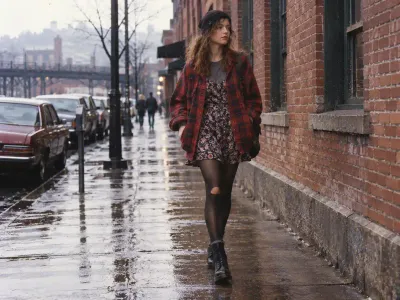
If the 1980s power silhouette was about looking expensive and in control, grunge was the opposite on purpose. It's a silhouette built from layers, loose shapes, and clothes that look worn, and I think it's the clearest sign that the 1990s wanted to leave the 1980s behind.
Grunge came out of the music scene in Seattle and the wider Pacific Northwest, with bands like Nirvana, Pearl Jam, and Soundgarden. When Nirvana's Nevermind became a huge hit in 1991, the look went global almost overnight. It was never designed - it came from what young people in a cold, rainy, working-class region actually wore, and from thrift stores. Plaid flannel shirts worn open over T-shirts, thermal tops, loose jeans ripped at the knee, long baggy cardigans, knitted hats, and heavy work boots or Dr. Martens were the basics.
For women, grunge had its own distinctive mix. The key combination was something soft and pretty with something heavy and tough: a floral tea dress or a slip dress worn with combat boots, a big cardigan, and tights, often with messy hair and smudged make-up. That contrast - thrift-shop femininity and practical, masculine layers - is what makes the grunge silhouette so recognisable. Everything was loose and layered rather than fitted, and nothing was supposed to look new.
Then the fashion industry noticed. In 1992, Marc Jacobs showed a grunge-inspired collection for the American label Perry Ellis, with silk flannel-print shirts and expensive versions of thrift-store clothes, and Vogue ran a grunge fashion shoot at the end of the year. It was controversial: the collection was a commercial failure, Jacobs lost his job, and many musicians found the idea of designer grunge ridiculous. But it became one of the most famous collections of the decade.
What I find most interesting about grunge is that it made "not trying" fashionable, much like the 1950s beatniks had. It also helped open the door for the decade's two other big stories: minimalism, which kept the plainness but made it expensive, and the distressed and pre-worn finishes that let mass-market clothes look second-hand straight off the rail.