The 1990s early 1990s
The Flannel Shirt
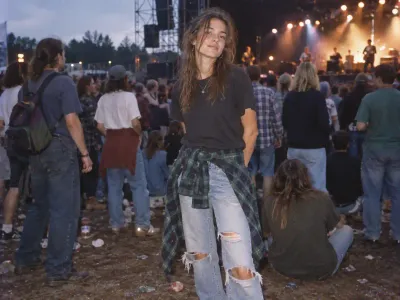
A plaid workwear shirt from the Pacific Northwest, bought cheap in thrift stores and worn open over T-shirts or tied round the waist - the single most recognisable garment of grunge.
If there's one garment that makes someone look instantly "early 1990s," it's the plaid flannel shirt. It was the uniform of grunge, and its story is a great example of how ordinary working clothes can suddenly become fashion.
A flannel shirt is a long-sleeved button-front shirt made of flannel, a soft, warm fabric - usually cotton or wool - that's been brushed to raise a fuzzy surface. In North America, these shirts were traditional outdoor workwear, worn by loggers, hunters, construction workers, and farmers, especially in cold, wet regions like the Pacific Northwest around Seattle. They came in bold checks and tartans, usually in red, blue, green, and black, and they were cheap, practical, and hard-wearing.
In the late 1980s and early 1990s, they were simply what many young people in Seattle already wore: warm, practical in a rainy climate, and plentiful in thrift stores. When grunge bands became famous, the flannel shirt became famous with them. It was worn in very specific ways. Oversized and open over a band T-shirt or thermal top, often with the sleeves pushed up. Layered over a hoodie. Or tied around the waist by the sleeves, which became an iconic early-1990s look. It was unisex: women wore it with jeans, but also over slip dresses and floral dresses, with Dr. Martens.
Much of its appeal was that it wasn't fashion. A worn, faded flannel from a thrift store said you didn't care about looking polished and weren't trying to impress anyone. That made it all the more ironic when designers picked it up: Marc Jacobs' 1992 grunge collection for Perry Ellis included flannel-look shirts in silk, and soon mass-market retailers sold new flannel shirts designed to look old.
I have a soft spot for the flannel shirt because it's so democratic. It was cheap, comfortable, and easy to find, and it looked the same on everyone. It has never quite gone out of style since, and it's still one of the easiest ways to nod to the 1990s.