The 1930s
1930–1939
Bias-cut satin and Hollywood glamour on one side, Depression-era house dresses on the other - the decade the waist came back and the hemline dropped.
Silhouettes
-
The 1939 Nipped-Waist Silhouette
A sharply cinched waist, fuller and shorter skirts, and the return of the corset in Paris's last pre-war collections - a preview of the New Look that the war postponed by eight years.
-
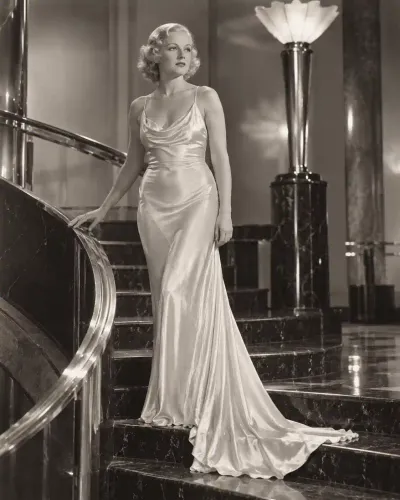
The Bias-Cut Evening Silhouette
The long, liquid, body-skimming evening gown cut on the diagonal of the fabric - the defining glamour silhouette of the decade, from Paris couture to the Hollywood screen.
-
The Broad-Shoulder Silhouette
Widened, padded, and puffed shoulders over narrow hips - an inverted-triangle line pushed by Schiaparelli in Paris and Adrian in Hollywood, and the direct ancestor of the 1940s square shoulder.
-
The Return of the Natural Waist
The abrupt end of the 1920s flapper line - waists climbing back to their natural position and hemlines dropping to mid-calf almost overnight, just as the stock market crashed.
-
The Trouser Silhouette
Wide-legged, high-waisted trousers worn off the beach for the first time - made glamorous by Marlene Dietrich and Katharine Hepburn, and still daring for most women by the end of the decade.
Designers
-
Adrian
MGM's chief costume designer, who dressed Garbo, Harlow, Shearer, and Crawford - and whose screen designs, from the Letty Lynton dress to the Eugénie hat, sold in department stores across America.
-
Coco Chanel
Already the most famous designer of the 1920s, Chanel spent the 1930s on a short Hollywood detour, costume jewellery, and a bitter rivalry with Schiaparelli - before closing her couture house at the outbreak of war.
-
Elsa Schiaparelli
The Italian-born Paris couturière who brought surrealism, shocking pink, visible zips, and the padded shoulder into fashion - Chanel's great rival, and the decade's wittiest designer.
-
Jean Patou
The Parisian couturier who dressed the tennis star Suzanne Lenglen, put his monogram on sweaters, and in 1929 dropped the hem and put the waist back where it belonged - opening the door to the whole 1930s silhouette.
-
Madeleine Vionnet
The couturière who turned the bias cut from a trimming technique into a whole way of making clothes - draping on a half-scale doll and building gowns that moved with the body rather than against it.
-
Mainbocher
The first American to run a successful Paris couture house - a former Vogue editor who dressed Wallis Simpson for her 1937 wedding and designed the famous 1939 corset photographed by Horst.
-
Nina Ricci
An Italian-born dressmaker who opened her Paris house with her son in 1932 - in the depths of the Depression - and built it on softly draped, wearable, reasonably priced femininity.
Garments
-
Beach Pyjamas
Loose, wide-legged trouser outfits for the beach and resort - the Riviera fashion that made it acceptable for fashionable women to be seen in trousers in public.
-
Lounging and Hostess Pyjamas
Wide-legged pyjamas in silk, satin or lamé, worn at home for cocktails and informal entertaining - the glamorous, after-dark cousin of beach pyjamas, and another way trousers crept into women's wardrobes.
-
The Backless Evening Gown
A long evening gown cut away to the waist at the back - the 1930s' boldest piece of glamour, shifting fashion's focus from the legs of the 1920s to a bare, suntanned back.
-
The Bias-Cut Slip and Lingerie
Satin and crepe slips, cami-knickers and 'step-ins' cut on the bias - the smooth, fluid underthings that made a clinging 1930s dress possible, and that rayon brought within almost everyone's reach.
-
The Bolero Jacket
A short, open jacket ending above the waist - the 1930s answer to wearing a backless evening gown to dinner, and a quick way to update a plain day dress.
-
The Depression House Dress
A cheap, washable, printed cotton day dress with short or puffed sleeves and a mid-calf hem - the garment most women actually wore through the Depression, far from Hollywood satin.
-
The Fox Fur Stole
Silver fox thrown over a suit or gown - often a whole animal, head, paws and tail included - was the decade's ultimate status accessory, with dyed rabbit as the everyday stand-in.
-
The Maillot Swimsuit
A close-fitting one-piece swimsuit with a low back and halter or narrow straps - made possible by new elastic yarns, and designed as much for sunbathing as for swimming.
-
The Spectator Shoe
The two-tone shoe - white with a contrasting toe and heel in brown, black or navy - borrowed from men's sporting footwear and worn by women with summer day clothes throughout the decade.
-
The Swagger Coat
A loose, flared coat that swung out from the shoulders - usually three-quarter or full length, often in tweed - and the perfect easy-fitting partner for the decade's slim, bias-cut dresses.
-
The Tennis Dress
Shorter, sleeveless and ever more practical - the 1930s tennis dress shed its stockings, grew a divided skirt, and eventually gave way to shorts, making the court one of the first places women wore truly functional sportswear in public.
-
The Tilted Hat and the Eugénie Craze
Small hats worn tipped over one eye - the defining millinery of the decade, sparked by a feathered 'Empress Eugénie' hat that Garbo wore on screen and everybody copied.
Fabrics & Textiles
-
Art Deco and Geometric Prints
Zigzags, sunbursts, stepped shapes and stylised flowers - the decorative language of Art Deco carried over from the 1920s onto 1930s dress fabrics, before softer florals took over mid-decade.
-
Crepe de Chine and Rayon Crepe
Softly textured, fluid crepes in silk and increasingly in rayon - the everyday dress fabric of the decade, draping almost like satin at a fraction of the price.
-
Lamé and Metallic Fabrics
Fabrics woven or knitted with metallic threads in gold and silver - the Art Deco era's most dazzling evening material, and a Hollywood favourite for catching studio light.
-
Lastex and the Elastic Revolution
An elastic yarn made from a fine rubber core wrapped in cotton, silk, or rayon - the quiet innovation behind clinging swimsuits, two-way-stretch girdles, and the end of the rigid corset.
-
Silk Satin and Charmeuse
Lustrous, fluid silks with a glossy face and a matte back - the fabrics that made the bias cut shine, literally, on the dance floor and the cinema screen.
-
The Invention of Nylon
DuPont's fully synthetic fibre, first made in 1935 and announced in 1938 - unveiled to the public as stockings at the 1939 World's Fair, just in time to vanish into wartime parachutes.
Construction & Fit
-
Bra Cup Sizing and the Uplift Bra
The 1930s bra shaped and lifted the bust into two separate, rounded forms - and the introduction of lettered cup sizes let women buy a bra that actually fitted.
-
Godets and the Flared Hem
Triangular fabric inserts and shaped panels set into skirts to keep them slim over the hips but flaring at the hem - the everyday construction trick behind the decade's graceful line.
-
The Bias Cut
Cutting garment pieces at 45 degrees to the fabric's grain so they stretch, drape, and cling - the construction technique behind the decade's most famous gowns, and one of the hardest to master.
-
The Cowl Neckline
Soft folds of fabric falling at the neckline or back, made possible by cutting on the bias - one of the signature details of 1930s eveningwear and blouses.
-
The Roll-On Girdle and the End of the Corset
Elastic girdles that could be pulled on without laces or hooks replaced the boned corset for most women - smoothing the hips for bias-cut dresses while letting the body move.
-
The Zipper Arrives
The zip fastener moved from boots and bags into fashion in the 1930s - shown off as decoration by Schiaparelli, adopted in menswear, and slowly working its way into women's dresses.
Culture & Context
-
Hollywood Glamour and the Silver Screen
In the golden age of the studio system, film costume designers became the most influential fashion voices in America - and department stores sold copies of what the stars wore.
-
Sport, Leisure, and the Suntan
Tennis, hiking, cycling, swimming, and sunbathing reshaped the ideal body and wardrobe of the 1930s - an athletic, tanned look that brought shorts, swimsuits, and beach pyjamas into fashion.
-
Surrealism and Fashion
The art movement of dreams and strange juxtapositions crossed into fashion in the 1930s - lobster dresses, shoe hats, and trompe l'oeil tears - mostly through Schiaparelli's collaborations with Dalí and Cocteau.
-
The Great Depression and Dress
After the 1929 Wall Street crash, mass unemployment and poverty reshaped how most people dressed - home sewing, mending, feed-sack cotton, and cheap copies of Hollywood styles.
-
The Wallis Simpson Effect
The American divorcée for whom Edward VIII gave up the throne in 1936 - and whose lean, immaculate, understated chic made her one of the most copied women of the decade.