The 1990s mid-to-late 1990s
Britpop and Cool Britannia
Oasis, Blur and Pulp, the Union Jack reclaimed, and a new generation of London designers - the mid-1990s moment when British music, art and fashion felt like the centre of the world again.
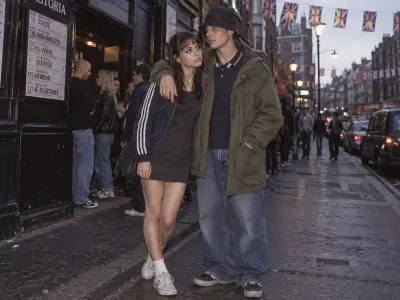
In the mid-1990s, Britain enjoyed a burst of confidence in its own culture that people compared to the Swinging London of the 1960s. Music led the way, but fashion, art, and even politics joined in, and the press gave it a name: "Cool Britannia."
The music was Britpop. Bands like Oasis, Blur, Pulp, Suede, and Elastica drew on British guitar music of the 1960s and 1970s, and their rivalry - especially Oasis against Blur in 1995 - was front-page news. Their style was a mix of retro and everyday. Men wore Adidas track tops, Fred Perry polo shirts, parkas, Clarks desert boots, and Kangol hats, and haircuts took inspiration from the 1960s mods. Women wore slim 1960s- and 1970s-inspired shapes: short shift dresses, track tops, skinny cords and jeans, fringed hair, heavy eyeliner, and Dr. Martens or trainers. Much of it came from charity shops and markets, with a knowing nod to the past.
The Union Jack became a symbol of the moment, reclaimed from the far right and used playfully, on guitars, clothes, and album covers. The most famous example came at the 1997 BRIT Awards, when Geri Halliwell of the Spice Girls wore a tiny Union Jack dress that became an instant icon. In March 1997, Vanity Fair put the singer Liam Gallagher and the actress Patsy Kensit on its cover under the headline "London Swings! Again!"
Fashion was a big part of the story. A new generation of London designers became internationally important, including Alexander McQueen, who took over at Givenchy in 1996, and John Galliano, who moved from Givenchy to Dior. Stella McCartney became creative director at Chloé in 1997. Young British artists, fashion students, and musicians mixed in the same clubs, magazines, and parties, and London fashion week gained a new buzz.
By the end of the decade, the moment had faded, and "Cool Britannia" became associated with a slightly embarrassing kind of national self-promotion, especially after the new Labour government embraced it. But I think it's an important example of how music, fashion, and national mood can combine. For a few years, British street style and British designers set the pace for everyone else.