The 1990s throughout the 1990s
Oversizing and the Dropped Crotch
How 1990s baggy clothes were actually cut - extra-wide legs, deep crotches, dropped shoulders and deliberately enlarged patterns - from hip-hop and skate jeans to grunge layers and Margiela's giant garments.
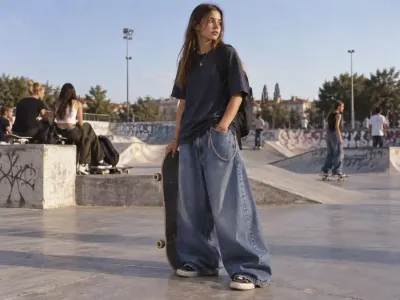
The 1990s loved big clothes, from hip-hop jeans to grunge cardigans to raver trousers. It's easy to think "baggy" just means "a bigger size," but many 1990s clothes were cut differently to create their loose shapes, and this entry looks at how.
The simplest way to make clothes oversized was just to wear a much bigger size, and plenty of people did exactly that, buying jeans and T-shirts several sizes up or wearing clothes from thrift stores and older brothers. But the most typical 1990s shapes were designed into the pattern. In trousers and jeans, the leg was cut very wide all the way down, so it hung straight or even flared from the hip. The crotch was dropped: the crotch seam was set much lower than usual, sometimes far down the thigh, so the trousers hung loose and deep at the seat. And the waist was often designed to sit on the hips or below, which, combined with the dropped crotch, created the sagging look. At its most extreme, in late-1990s rave and skate brands like JNCO, jeans had leg openings of many inches and looked almost like skirts.
Tops followed the same logic. Oversized T-shirts, sweatshirts, and shirts had dropped shoulders, with the shoulder seam falling well down the upper arm; extra width through the body; and longer lengths. That created a slouchy, boxy shape that hid the body and was comfortable to move in.
Designers played with oversizing too. Martin Margiela enlarged garments to exaggerated sizes, changing their proportions to make people look at familiar clothes in a new way, following the 1980s Japanese designers' interest in volume and space around the body.
I think oversizing is interesting because it's the opposite of almost everything in dressmaking tradition, which is about fitting clothes closely and precisely to the body. The 1990s turned that on its head: comfort, movement, and the attitude of the loose shape were more important than fit. For young people, baggy clothes could also mean freedom - from the fitted, figure-conscious fashion of the previous generation, and from being looked at in a certain way.