The 1930s throughout the 1930s
The Tennis Dress
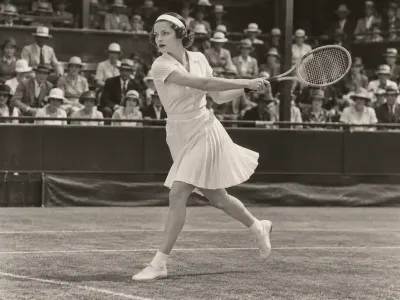
Shorter, sleeveless and ever more practical - the 1930s tennis dress shed its stockings, grew a divided skirt, and eventually gave way to shorts, making the court one of the first places women wore truly functional sportswear in public.
Tennis gets a mention in the sport and leisure entry, but its clothing deserves a closer look. In the space of about a decade, what women wore to play tennis changed more than almost any other kind of clothing, and many of those changes later spread into everyday fashion.
The starting point was the 1920s, when Jean Patou dressed the French champion Suzanne Lenglen in a pleated, knee-length skirt, a sleeveless cardigan, and a bandeau. By the standards of earlier tennis clothes, which had included long skirts, corsets, and hats, that was revolutionary. Through the early 1930s, tennis dresses kept moving in the same direction: they were almost always white, with shorter, pleated or flared skirts that allowed the legs to move, short sleeves or no sleeves, and open necklines. Stockings, which top players had still worn for most of the 1920s, disappeared around the turn of the decade, replaced by bare legs and ankle socks.
Then came the most controversial step: trousers, of a sort. In 1931 the Spanish player Lilí Álvarez appeared at Wimbledon in a divided skirt, closer to wide culottes, designed by Elsa Schiaparelli, and it caused a real stir. Within a few years, some leading players had gone further and were wearing tailored shorts, notably the American players Helen Jacobs and Alice Marble. Tennis authorities and the press argued about it, but practicality won. By the end of the decade, tailored shorts and much shorter skirts were an established sight on court.
The garments themselves were practical and simple: white cotton, linen, or piqué, sometimes knitted tops, and a cardigan or sweater for warming up. What I find fascinating is how much tennis did for women's clothing more broadly. It was one of the first places where women could wear bare legs, short hems, and even shorts in public, in front of crowds and photographers, and have it seen as sensible rather than scandalous. The same easy, white, sporty look moved off the court into resortwear and summer dresses, and it helped make trousers and shorts seem normal for women. It's a lovely example of sport acting as a testing ground for fashion.