The 1930s throughout the 1930s
The Bias-Cut Slip and Lingerie
Satin and crepe slips, cami-knickers and 'step-ins' cut on the bias - the smooth, fluid underthings that made a clinging 1930s dress possible, and that rayon brought within almost everyone's reach.
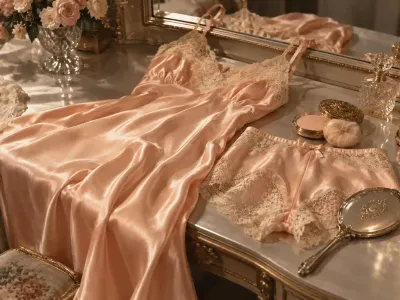
The bias-cut evening silhouette is famous for clinging to the body, and anything that clings also shows what's underneath. A lumpy seam, the edge of a girdle, or a bunched petticoat would ruin the line. So the 1930s needed a new kind of underwear, and the answer was to cut the lingerie the same way as the dress.
The most important piece was the slip: a smooth, close-fitting under-dress, usually with thin straps and a V or straight neckline, cut on the bias so that it stretched gently over the body and fell straight to the hem without wrinkles. Worn under a bias-cut dress, it let the outer fabric slide over the body smoothly instead of catching. Slips were often finished with a little lace at the neckline and hem, and the best were made from silk satin or charmeuse or silk crepe. Colours were soft: ivory, peach, "tea rose" pink, and flesh tones that wouldn't show through pale dresses.
Other pieces followed the same idea. Cami-knickers combined a camisole top and loose knickers in one piece, fastening between the legs, while French knickers - sometimes sold as "step-ins," a name also used for one-piece teddies - were short, wide-legged panties, often bias-cut and lace-trimmed. These went on over or alongside the new foundation garments of the decade - the lighter roll-on girdle and the shaped, cup-sized bra - which were far smaller and smoother than the corsets of earlier generations.
What made this lingerie so widespread was rayon. Real silk was expensive, but rayon satin and crepe gave a similar sheen and drape at a much lower price, so glamorous bias-cut underthings were available to shop girls as well as film stars. Many women also made their own from patterns, since a slip needed very little fabric. The look was so beautiful that it began to cross over: some 1930s evening gowns look almost exactly like long slips - an idea the 1990s slip dress would take all the way, and Hollywood costume designers made the connection explicit. I think this is a great example of how underwear and outerwear shape each other. The glamorous 1930s dress wasn't just a triumph of cutting - it depended on a whole new wardrobe of smooth, soft things underneath.