The 1990s mid-to-late 1990s
Microfibre and Performance Fabrics
Ultra-fine polyester and nylon microfibres, waterproof-breathable membranes and technical stretch blends - sports and outdoor textiles that crossed into everyday and designer clothing in the 1990s.
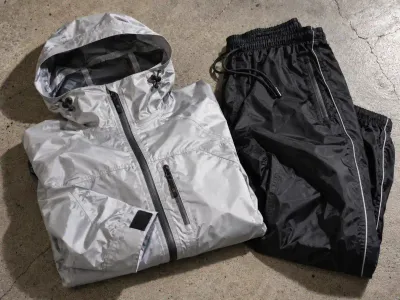
Many of the fabrics on this site are natural fibres or early synthetics. The 1990s added something new: fabrics engineered for performance, originally for sports and the outdoors, which moved into everyday and even high-fashion clothing. They're a big part of why late-1990s clothes looked and felt so modern.
Microfibre is the most important of these. It's a synthetic fibre - usually polyester or nylon - finer than a strand of silk. Fibres that fine can be woven into fabrics that are very soft, light, and drapey, with a silky or suede-like feel, and tightly enough to resist wind and light rain while still letting moisture escape. Microfibres had been developed from the 1970s, including Japan's famous Ultrasuede, but they became much more widely used in clothing in the early 1990s, in everything from raincoats and trousers to lingerie and blouses.
Other technologies followed the same path from sport to street. Waterproof-breathable membranes such as Gore-Tex, developed in the 1970s, became common in outdoor jackets, and fleece moved from mountains to shopping centres. Stretch fibres like spandex were blended into ever more fabrics, from jeans to suiting, making clothes more comfortable and close-fitting. And new finishes gave fabrics sheen, reflectivity, or a technical, slightly plastic look.
Designers embraced the new materials. Minimalist designers like Helmut Lang and Miuccia Prada, whose use of industrial nylon has its own entry, used technical fabrics in otherwise elegant clothes, and Prada launched a sportswear-based line, Prada Sport, in the late 1990s. On the high street, tech fabrics appeared in cargo pants, shiny jackets, and tops. The shiny, futuristic side of the Y2K silhouette relied on them heavily.
What I find most interesting is how these fabrics blurred the line between function and fashion. Clothes began to be sold not just on how they looked but on what they could do: keep you dry, wick away sweat, stretch, or pack flat. That idea - clothing as equipment - has become enormously important since, from athleisure to techwear, and a lot of it starts in the 1990s.