The 1990s throughout the 1990s
Prada Nylon
A tough, tightly woven black nylon, until then used for things like military tents and parachutes, that Miuccia Prada turned into the most coveted luxury material of the early 1990s.
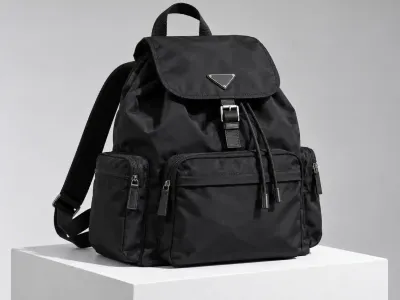
Nylon has a long history on this site - its invention in the 1930s, wartime shortages, and 1950s easy-care clothes. But until the 1990s, nobody thought of it as a luxury material. Prada changed that, and it's one of the most surprising fabric stories I know.
The fabric itself is a dense, tightly woven nylon, sometimes called Pocone, originally made for things like military tents and parachutes. It's tough, light, water-resistant, and slightly shiny, with a crisp, industrial feel. It belonged to the world of military kit and practical bags, not fashion. From the late 1970s, Miuccia Prada began using it for bags, and in 1984 she launched a nylon backpack, in plain black with only a small triangular metal logo.
At first, it seemed a very strange idea: a luxury house known for fine leather selling bags made of what looked like a cheap, practical material, at a high price. That was the point. The nylon bag suggested a new kind of taste that was practical, understated, and intellectual rather than showy - a direct rejection of 1980s flashiness, and a perfect fit for the minimalist mood. By the early 1990s, the black Prada nylon backpack had become one of the most desired status accessories in the world, and it was widely copied and counterfeited.
Prada extended the fabric into clothing. Nylon appeared in coats, jackets, skirts, and trousers in its collections, and it became part of the house's broader use of technical and performance fabrics, including the sporty Prada Sport line. Other designers followed, and industrial and technical materials became an accepted part of luxury fashion.
I think Prada nylon is a brilliant example of how fashion can change the meaning of a material. The fabric didn't change - but by putting it in a new context and pricing it as luxury, Prada made people see it completely differently. It's the same move that designers have made many times since, turning humble or industrial materials into objects of desire.