The 1960s throughout the 1960s
The Polo Neck
The close-fitting roll-collar sweater - inherited from the beatniks and the Left Bank, worn skinny-ribbed under shift dresses and pinafores, and one of the 1960s' great unisex basics.
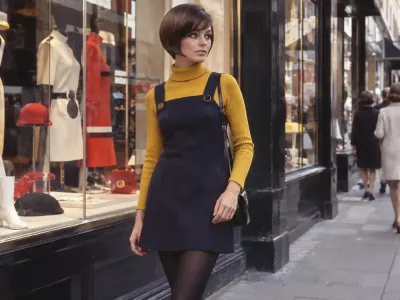
The polo neck - called a turtleneck in the US - is a knitted sweater or top with a tall, close-fitting collar that folds over on itself around the neck. It's so ordinary today that it's easy to forget how much it meant in the 1960s, when it became one of the key pieces of a modern, youthful wardrobe.
It already had a long history as practical clothing for sailors, sportsmen, and workers, because a close collar kept out wind and cold. In the 1950s, it took on a new meaning. The black polo neck was part of the uniform of beatniks and of the intellectuals and artists of Paris's Left Bank, and it came to suggest someone thoughtful, creative, and slightly rebellious - a person who cared more about ideas than conventional smartness. A polo neck worn instead of a shirt and tie, or instead of a blouse and pearls, was a small statement.
In the 1960s, that idea became mainstream fashion. For women, polo necks were worn in many ways. A fine, close-fitting knit - often in the new synthetic yarns, which were cheap and came in bright colours - could be worn under a sleeveless shift dress or a pinafore, a very characteristic mid-1960s look. The tight, ribbed "skinny rib" sweater, often with a polo or high neck, was sold by the fashionable boutiques and was ideal with mini skirts and slim trousers. And a simple black polo neck with slim trousers and flats was the height of understated chic.
It suited the decade's graphic, clean-lined look. A polo neck frames the face and hides the neck, making a neat, simple shape at the top of the body, which went perfectly with the sharp, geometric Sassoon haircuts and the slim, boyish ideal of the mid-1960s. It was also truly unisex: men wore polo necks under suit jackets instead of shirts, a trend that was considered daring at the time. For me, the polo neck is one of the great quiet heroes of the 1960s wardrobe - not flashy, but modern, flexible, and so influential that we barely notice it now.