The 1980s throughout the 1980s
Goth Subculture
Black lace, velvet, fishnets, crucifixes, backcombed hair and white faces - the post-punk subculture that grew around London's Batcave club from 1982, and raided the Victorian mourning wardrobe to do it.
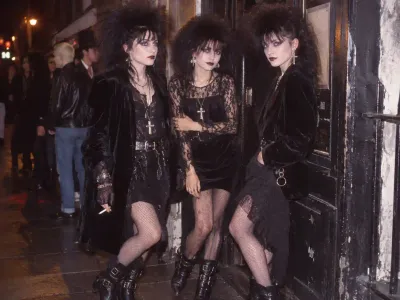
Goth is the 1980s subculture I'd most like to rescue from the cliché. It's easy to reduce it to "people who wear black," but it had a rich, carefully assembled visual language, and it borrowed from fashion history more knowingly than almost any other youth style of the decade.
It grew out of the post-punk music scene of the late 1970s and early 1980s, around bands like Siouxsie and the Banshees, Bauhaus, and The Cure. The key moment was the opening of the Batcave club in London's Soho in 1982, which became the scene's meeting place and gave it a name for a while. Goths shared punk's outsider attitude and DIY approach, but where punk was aggressive and ripped, goth was dark, dramatic, and romantic.
The clothes were mostly black, and built from layers. Lace, velvet, satin, and net were layered over each other with fishnet tights, pointed boots or buckled winklepickers, and a lot of silver jewellery - crucifixes, ankhs, rings, and chains. Hair was backcombed into huge, spiky shapes, often dyed black, sharing the decade's love of big hair but taking it somewhere much darker. Faces were powdered pale, with heavy black eyeliner and dark lipstick, on men as much as women. Like the New Romantics, goths loved historical costume, but they picked the gloomier periods.
That's where the fashion history comes in. Much of the goth wardrobe came, directly or indirectly, from the Victorians: high-necked lace blouses, long black skirts, velvet jackets, jet-style jewellery, and the whole idea of dressing theatrically in black are all borrowed from Victorian mourning dress and mourning customs. Much of it was literally second-hand: charity shops and flea markets were full of old black clothes, lace, and costume jewellery, which fit the same thrift-store spirit that drove a lot of 1980s street style. For me, goth is a fascinating mirror image of the mainstream 1980s. The decade's bright, optimistic, money-flashing look had an underside that was dark, bookish, and nostalgic - and, notably, the most fashionable designers of the decade, like Rei Kawakubo, were dressing in black too, though for very different reasons.