The 1970s 1970s
Soul Train and Black Style
From 1971, a nationally syndicated dance show put young Black dancers and their own clothes - afros, platforms, flared trousers, hot pants - in front of America every week, while designers like Stephen Burrows took Black style to the catwalk.
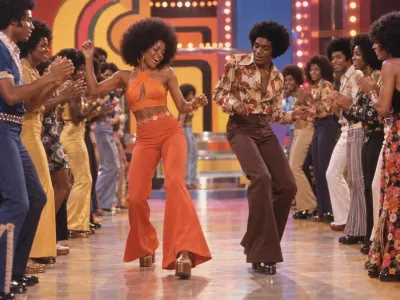
Soul Train is one of the most important fashion sources of the 1970s, and it almost never appears in fashion histories. For a lot of American viewers it was the most direct way to see what young Black people were actually wearing to go out - and it set trends that the rest of the country followed.
The show was created by Don Cornelius in Chicago, first as a local programme in 1970, then syndicated nationally from 1971 and soon based in Los Angeles. The format was simple: current soul and funk acts performed, and a floor full of young dancers showed off. The dancers weren't given costumes. They dressed themselves, and they dressed to be seen, especially when their turn came to dance down the "Soul Train line" between two rows of other dancers. So every week, viewers saw a parade of real street and club fashion: big natural afros, wide-lapelled shirts, high-waisted flared trousers and bell-bottoms, hot pants, halter tops, jumpsuits, hats, and the tallest platforms around, in bright colours and shiny fabrics.
The afro is the throughline. The 1960s Black is Beautiful movement had made natural hair a political statement; by the early 1970s, the big, rounded afro was also simply the height of fashion, and Soul Train showed it at its most glamorous, alongside cornrows, headwraps, and fashions borrowing from African dress. That sense of pride and self-presentation carried directly into disco, which grew out of Black and Latino, often gay, club culture before it went mainstream.
Black designers were shaping high fashion at the same time. Stephen Burrows, working in New York, made clinging jersey dresses in bright colour blocks with his "lettuce" hem - a rippling, stretched edge that fluttered as the wearer danced - and they were perfect for the disco dance floor. In 1973 he was one of five American designers, alongside Halston, who showed at the famous "Battle of Versailles" fashion show in France, where American designers and a strikingly large group of Black models stunned the Paris audience. For me, Soul Train and Burrows belong together: they show Black style setting the pace of 1970s fashion, from the TV dance floor to the catwalk, rather than following it.