The 1950s 1950s
Printed Cotton and Horrockses
Crisp, glazed, beautifully printed cotton was the fabric of the 1950s summer dress - and in Britain, Horrockses Fashions turned it into something close to luxury, with prints by leading artists and a queen among its customers.
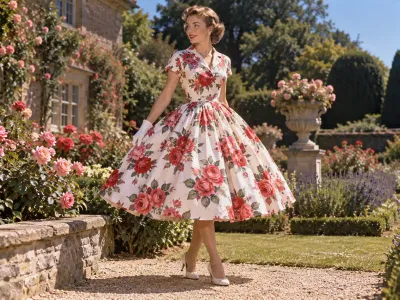
When I picture a 1950s summer dress, I picture cotton: crisp, lightly glazed, printed with flowers or stripes, with a full skirt held out by a petticoat. Cotton had long been the everyday fabric for summer and housework, but in the 1950s it moved up in the world, and the company that did most to lift it in Britain was Horrockses.
Horrockses, Crewdson & Co. was a big Lancashire cotton manufacturer, and in 1946 it set up a fashion company, Horrockses Fashions, to sell ready-made dresses using its own cloth. The idea was to show that cotton didn't have to mean cheap. The dresses were well cut, well made, and priced well above ordinary cotton dresses - a Horrockses dress was a real purchase, often costing something like a week's wages for a working woman. They came with big, full skirts that suited the New Look and the shirtwaist perfectly, and they were sold in good department stores all over the country and abroad.
The prints are what people collect today. Horrockses worked with in-house designers such as Pat Albeck and commissioned artists including Alastair Morton, Eduardo Paolozzi, and Graham Sutherland, so the fabrics ranged from bold roses and fresh florals to crisp stripes, checks, and more abstract, modern designs. The cotton was often finished to have a slight sheen, which kept the colours bright and helped the skirts hold their shape over petticoats. Queen Elizabeth II and Princess Margaret both wore Horrockses, which gave the label enormous prestige and made it clear that a cotton dress could be smart enough for public appearances.
More generally, the 1950s was a great period for printed cotton everywhere. Better printing technology, improved finishes that reduced creasing and shrinking, and a booming market for leisure clothes meant there were cottons for every taste, from simple gingham to the playful atomic and novelty prints of the later decade. What I love about Horrockses in particular is its ambition. It took the most ordinary fabric in the wardrobe and treated it with real design seriousness - and the surviving dresses, still bright after seventy years, make a very good case that it was right to.